
by Emma O'Connor | May 9, 2023 | Climate Resilient Development, Land Use
What is ETOD? In recent years, municipalities have used equitable transit-oriented development (eTOD) to incentivize public transit-use, reduce greenhouse gas emissions in urban spaces, improve quality of life, and elevate underserved communities. The professional...
by Hannah Gaudet | May 8, 2023 | Climate Resilient Development, Environmental Law, Land Use
Municipalities experiencing growth are changing their land developmental strategies in response to the effects of climate change. This is especially true for desert cities that are built on landscapes not meant to maintain large populations. They are challenged,...
by Elizabeth Mazza | May 7, 2023 | climate change, Climate Resilient Development, Environmental Law, Land Use
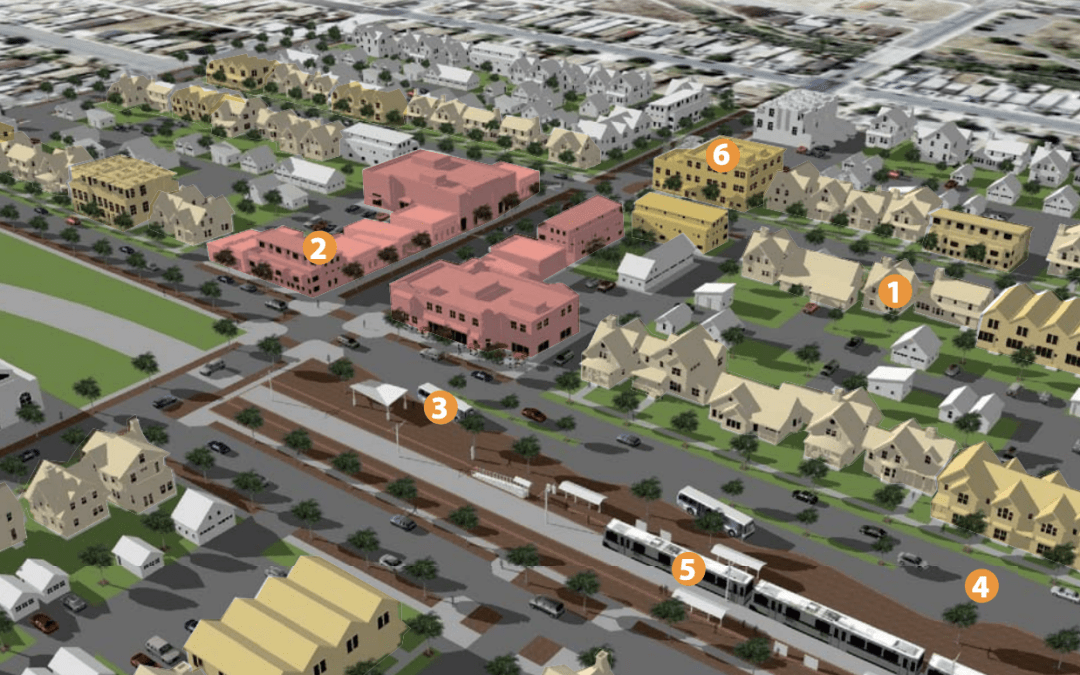
As populations continue to grow, demand for mixed-use, accessible, and affordable transit options does as well. Transit-Oriented Development (TOD) is a growth model characterized by compact development, a mix of land uses, and multi-modal transportation connectivity....
by Lauren Lynam | Apr 26, 2023 | Climate Resilient Development, Environmental Law, Land Use
In Paris, France, an urban farming startup has begun using an abandoned parking garage to develop a mushroom farm. Cycloponics, an urban farming startup company, has used the abandoned space to develop a mushroom farm. The farm uses rectangular bales suspended from...
by Lauren Palmer | Apr 24, 2023 | climate change, Climate Resilient Development, Land Use
There are a billion parking spots in the US. For every car in the country, there are four parking spots. Yet, the rise of autonomous ride-hailing vehicles, micro-mobility devices such as electric bikes and e-scooters, public transportation, remote work, online...
by Lauren Lynam | Apr 19, 2023 | climate change, Climate Resilient Development, Environmental Law, Land Use
Sustainable parking systems save space, increase energy efficiency, and reduce the environmental impacts of parking garages. Because of these incentives, municipalities and private actors will spend less money on overhead costs like electricity and gas, thus enabling...
